

You just scored a bag of premium beans. The aroma hits you the second you open it, bright, rich, promising. But here's the thing: without proper storage, those beans lose their magic fast. Like, really fast.
Let's fix that.
The Four Enemies of Fresh Coffee
Your beans have four sworn enemies working against them every single day: air, light, heat, and moisture. These villains don't take a day off, and they're shockingly efficient at turning your silky-smooth beans into flat, flavorless disappointments.
Air is public enemy number one. When oxygen hits those precious coffee oils, oxidation kicks in. The result? A stale, cardboard-like taste that no amount of cream can save.
Light breaks down the flavor compounds in your beans faster than you'd think. Even indirect sunlight can do damage over time, stripping away those complex notes you paid good money for.
Heat accelerates everything bad. It speeds up oxidation, degrades aromatic oils, and basically fast-forwards your beans straight to Dullsville.
Moisture invites mold, off-flavors, and a general disaster situation. Coffee beans are porous: they soak up humidity like a sponge, and they'll pick up every weird smell in your kitchen while they're at it.
The Perfect Storage Setup
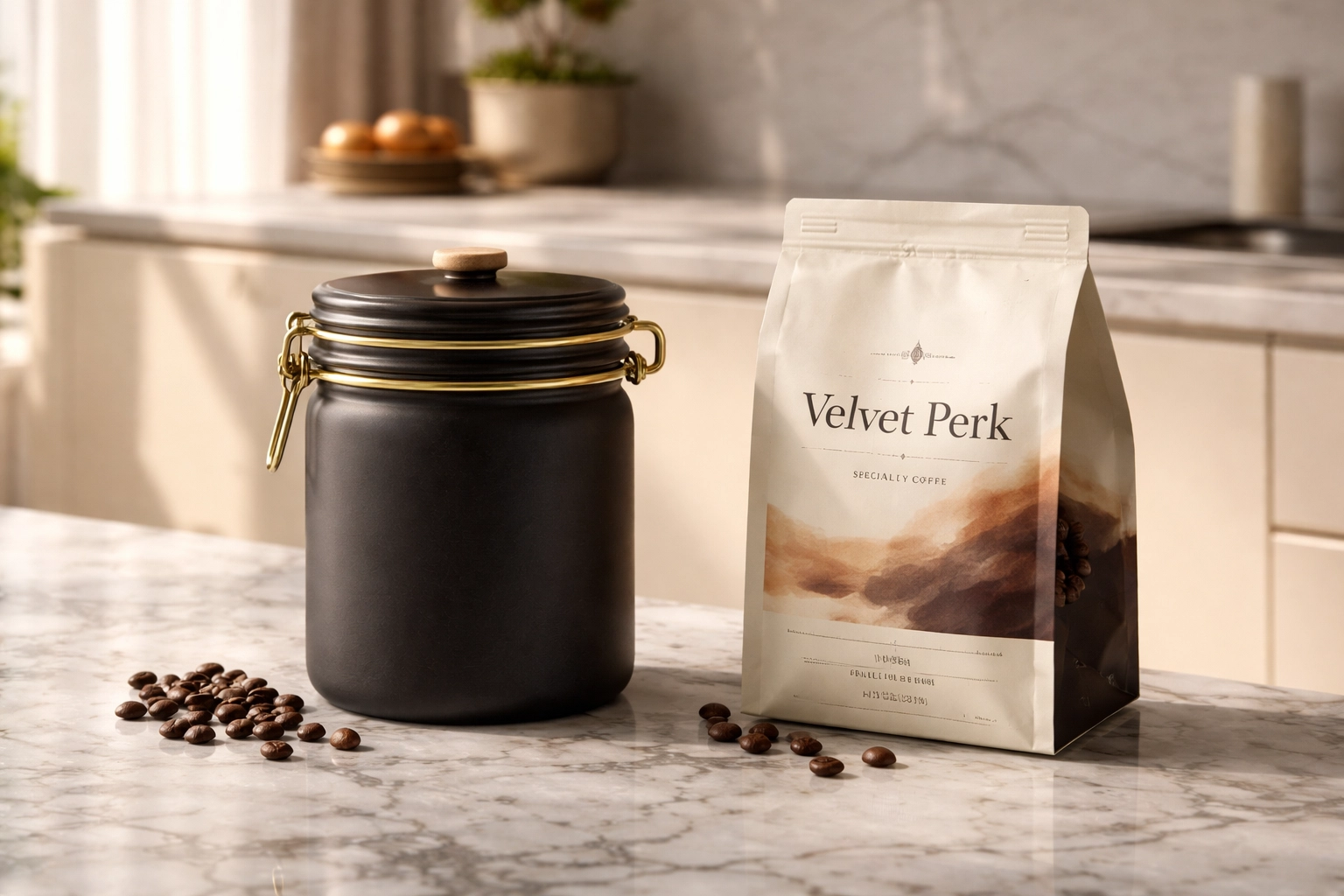
Here's your golden rule for how to store coffee beans: airtight, opaque, cool, and consistent.
Translation? You need a container that seals tight, blocks light, lives in a spot that stays around 65-75°F, and doesn't experience wild temperature swings.
Think of it like this: your beans want to chill in a dark, peaceful cave where nothing bothers them. Not a window-lit countertop. Not the fridge. Just a quiet, stable spot where they can maintain their freshness until you're ready to brew.
Container Choices That Actually Work
Not all containers are created equal when it comes to storing coffee beans.
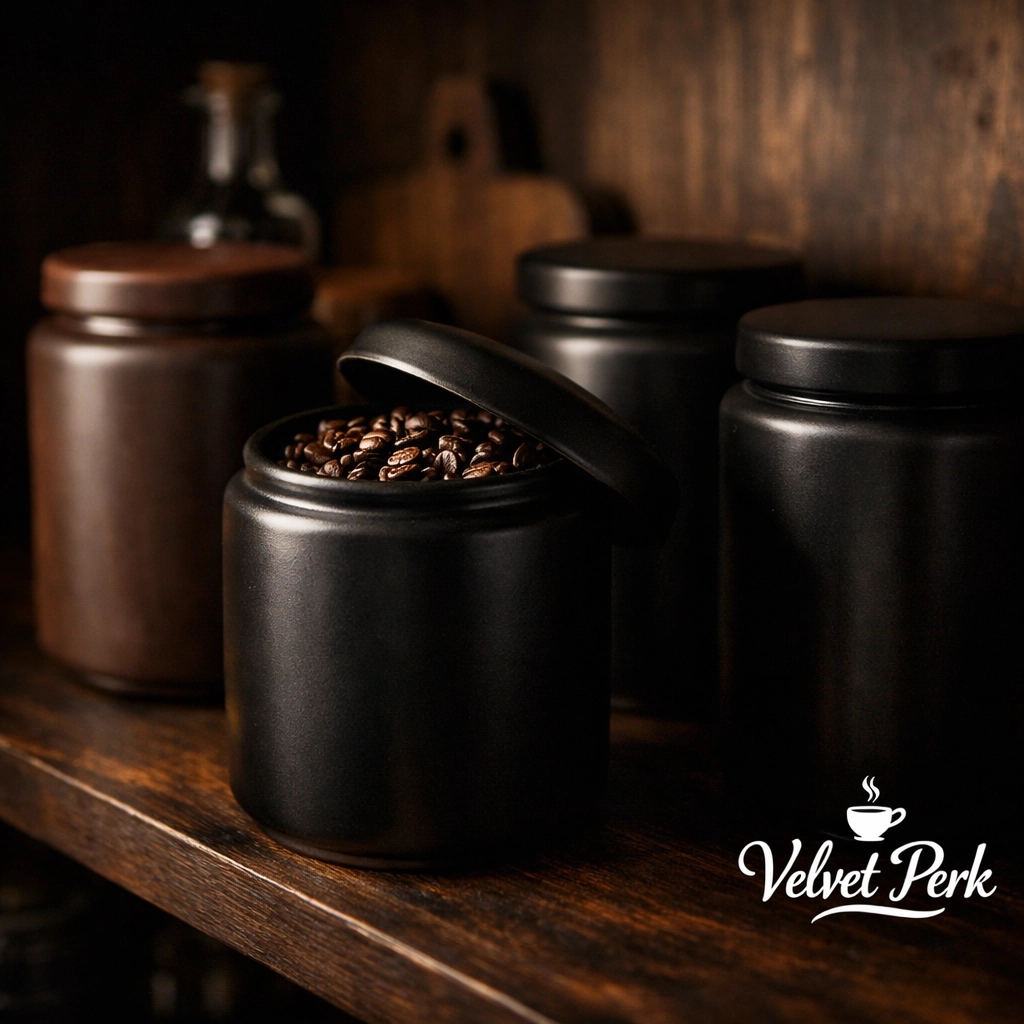
Ceramic containers with rubber seals are solid performers. They block light naturally, and a good rubber seal keeps air out like a champ.
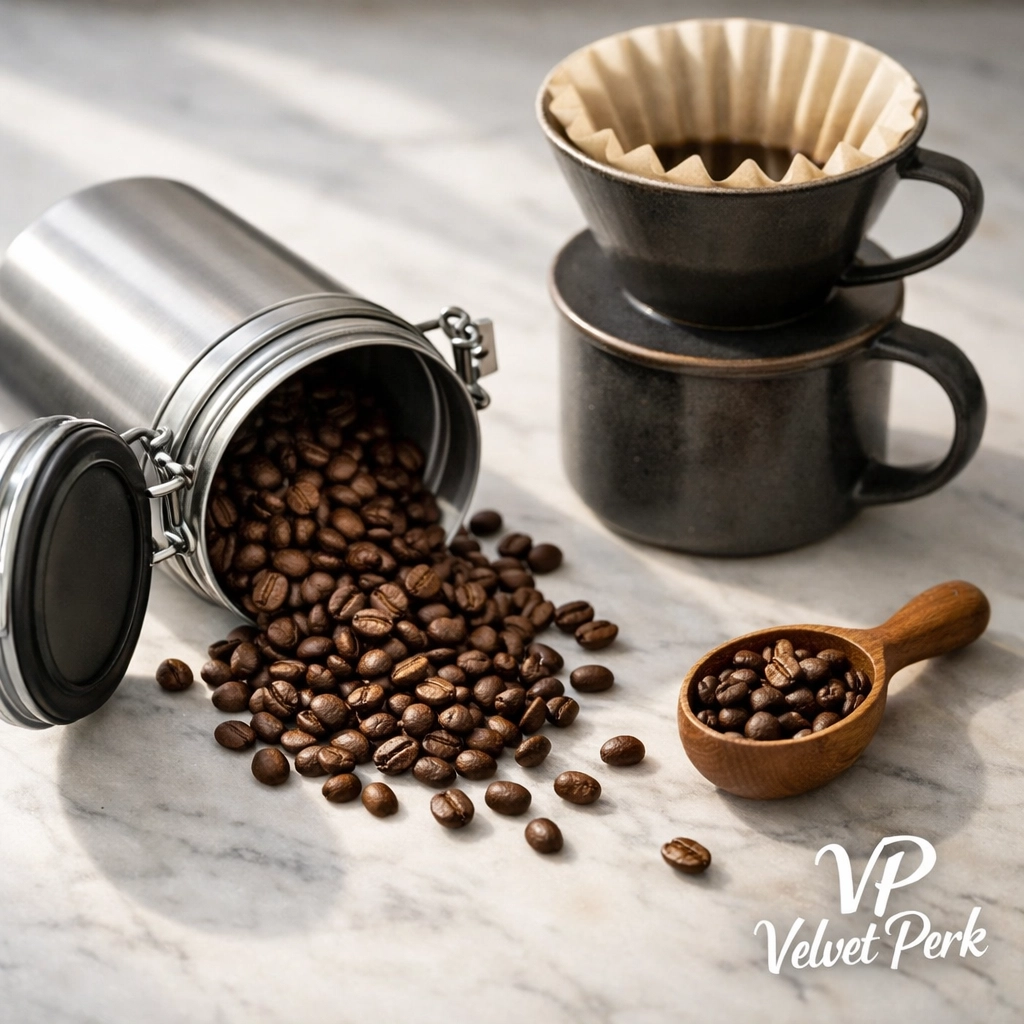
Stainless steel canisters work great too: just make sure they're opaque, not the clear-window kind. Steel is durable, maintains consistent temperature, and won't absorb odors.
Specialized coffee containers with one-way valves are the MVP option. These let CO2 escape (fresh beans release gas for days after roasting) while blocking oxygen from getting in. It's basically a one-way ticket out of Staletown.
Vacuum-sealed containers take things up a notch. By removing air entirely, you're giving your beans maximum protection. These are perfect if you're storing beans for more than a couple weeks.
What about the bag they came in? If it's a quality coffee bag with a resealable zip and foil lining (like the ones from specialty roasters), it'll do the job for a week or two. But transferring to a proper container is always the better move for long-term freshness.
Where to Keep Your Beans
Location matters just as much as the container.
Your pantry or kitchen cupboard is ideal: as long as it's away from the stove, oven, or any heat source. Dark, cool, and stable. That's the trifecta.
Avoid countertops, especially near windows. Even if your container is opaque, heat from sunlight can warm the exterior and create condensation inside when temperatures drop. Not good.
Don't put beans in the fridge. This is a huge mistake people make. Refrigerators are humid, full of strong odors (hello, leftover garlic), and create condensation every time you open and close the container. Your beans will taste like last night's dinner. Hard pass.
Room temperature is your friend. Aim for somewhere around 60% relative humidity and consistent temps in that 65-75°F sweet spot. Consistency is more important than hitting an exact number.
What NOT to Do (Common Mistakes)
Let's rapid-fire through the don'ts:
Don't buy more than you can use in a month. Fresh beats bulk every time. Order smaller quantities more often rather than stocking up like you're preparing for the apocalypse.
Don't freeze and refreeze. If you absolutely must freeze beans (maybe you got a massive bag as a gift), divide them into single-use portions in vacuum-sealed bags, freeze once, and thaw completely before opening. Never refreeze. The condensation will wreck them.
Don't grind in advance. Ground coffee loses freshness exponentially faster than whole beans. Grind only what you need, right before you brew.
Don't store near spices or strong-smelling foods. Coffee beans are like flavor sponges. Keep them away from anything aromatic unless you want cinnamon-garlic-coffee. (You don't.)
Don't ignore the roast date. Always check when your beans were roasted. The clock starts ticking immediately. Use the freshest beans possible and track when you opened the bag.
The Freshness Timeline
Here's how to think about your beans over time:
Week 1-2: Peak deliciousness. This is when your beans are at their absolute best: complex, vibrant, full of life. Brew and enjoy without hesitation.
Week 3-4: Still excellent. Flavor remains strong if you've stored them properly in an airtight container. This is your sweet spot for everyday brewing.
Month 2: Acceptable quality. You'll notice some subtle flavor loss, but properly stored beans are still totally drinkable. Not mind-blowing, but solid.
Month 3+: The decline accelerates. Even with perfect storage, you're losing aromatic compounds and complexity. Time to order fresh beans.
For maximum freshness, use your beans within 30 days of opening. That's the magic window where everything tastes the way the roaster intended.
Quick Storage Tips That Make a Difference
Label your containers. Write the roast date and the date you opened the bag. It takes five seconds and prevents the "how old are these?" guessing game.
Buy whole beans, not pre-ground. This gives you control over freshness right up until brew time. Whole beans stay fresh significantly longer.
Consider portion control. If you scored a big bag, divide it into smaller airtight containers. Open one at a time so the rest stays sealed and protected.
Keep your container clean. Coffee oils build up over time. Wash and dry your storage container completely between bags to avoid rancid oil contamination.
Trust your nose. Fresh beans smell incredible: bright, complex, inviting. If your beans smell flat, dusty, or like nothing at all, they've passed their prime.
The Bottom Line on How to Store Coffee Beans
Great coffee starts with great beans, but storage is what keeps them great. Protect your beans from air, light, heat, and moisture. Choose the right container. Find the right spot. Use them within a month.
It's not complicated, but it makes all the difference between a cup that sings and one that just sits there, flat and forgettable.
Your beans deserve better. Your mornings deserve better.
Store smart. Brew happy. Sip, savor, smile.