

It’s 7:15 AM.
The house is quiet. The laptop is still closed. This is your time.
You hear it. That familiar, aggressive whistle. The rolling boil. The kettle is screaming at you that it’s ready.
You reach for your favorite mug, the one that feels just right in your palm. You pour. Steam billows. The aroma hits you.
But then, you take that first sip.
Something is… off. It’s harsh. It’s bitter. It has a burnt edge that sticks to the back of your throat.
You did everything right. You bought the premium specialty coffee beans. You ground them fresh. You used filtered water.
So, what happened?
You scorched the soul out of your coffee.
The Boiling Point Blunder
Let’s talk science. (But the easy, “before-my-first-cup” kind.)
Water boils at 212°F.
To your kettle, that’s a victory. To your coffee beans, it’s an assault.
When you pour rolling, boiling water directly onto your grounds, you aren’t just brewing. You’re scalding.
Think of single origin coffee beans like a delicate piece of silk. You wouldn’t iron silk on the highest heat setting, would you? Of course not. You’d ruin the texture. You’d destroy the sheen.
Coffee is the same. Those beans spent months growing on a mountainside. They were hand-picked at peak ripeness. They were roasted to a precise profile to bring out notes of blueberry, chocolate, or jasmine.
Then, in three seconds of boiling water, all that nuance is gone.
Hotter isn’t better. Hotter is just… angry.

The Sweet Spot: 195°F to 205°F
This is where the magic happens.
In the specialty coffee world, we call this the “Goldilocks Zone.” It’s not too hot. It’s not too cold. It is just right.
When your water sits between 195°F and 205°F, it acts as a gentle solvent. It reaches into the coffee grounds and pulls out the good stuff.
The sugars. The bright acids. The aromatic oils.
It leaves the bad stuff behind.
You see, coffee beans contain tannins and other bitter compounds. These are the “security guards” of the bean. They only come out when things get too intense, like when the water is too hot.
When you stay in that sweet spot, you get a cup that is velvety. Smooth. Balanced.
A cup that makes you actually taste the difference between our Royal Velvet light-medium roast and a generic grocery store blend.
Why Your Roast Profile Changes the Rules
Not all beans are created equal.
At Velvet Perk, we offer a range of roasts because we know everyone’s morning “flow” is different. But here is a secret: your water temperature should actually change based on the roast you’re brewing.
Light to Medium Roasts (The Royal & Satin)
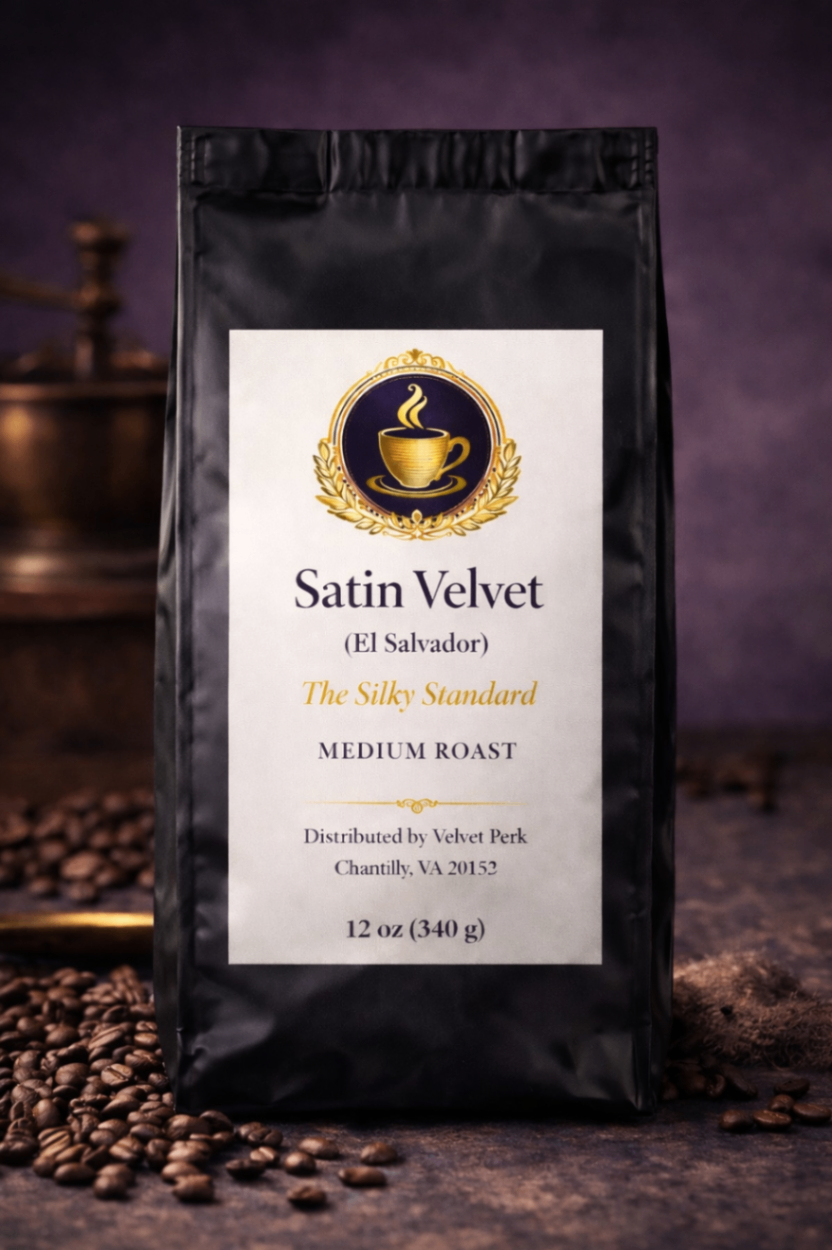
Our Royal Velvet and Satin Velvet beans are dense. They are packed with complex acidity. To unlock those floral and fruity notes, you need a little more “push.”
Target: 200°F – 205°F.
The higher heat helps break down the cellular structure of the lighter bean, ensuring you don’t end up with a sour or “under-extracted” cup.
Dark to Ultra-Dark Roasts (The Pure & Deep)
Now, let’s look at Pure Velvet or our midnight-dark Deep Velvet. These beans have spent more time in the roaster. They are more porous. They give up their flavors much more easily.
If you use water that’s too hot on a dark roast, you’ll end up with a cup that tastes like ash and regret.
Target: 190°F – 195°F.
Lowering the temperature allows the deep, smoky, chocolatey notes to shine without the harsh bitterness.
No Thermometer? No Problem.
We get it.
You’re working from home. You have a 9:00 AM Zoom call. You don’t always have time to play “scientist” with a digital thermometer.
(Though, if you want to, it’s a fun way to geek out.)
Here is the easiest hack in the world: The 30-Second Rule.
- Bring your kettle to a full boil.
- Wait for the “click” or the whistle.
- Take it off the heat.
- Wait exactly 30 to 45 seconds.
In that short window, the water temperature will naturally drop from 212°F into that glorious 200°F range.
It’s a small pause. A moment to breathe. A moment to smell the dry grounds before you pour.
It’s the simplest way to instantly upgrade your coffee ritual.

Respecting the Ritual
You work hard. You’ve curated your home office. You’ve invested in specialty coffee beans because you value quality over convenience.
Why stumble at the finish line?
Think about the journey those beans took. From a small farm in Guatemala or Colombia, hand-sorted, roasted-to-order, and delivered fast to your door.
Every degree matters.
When you control the temperature, you aren’t just making a drink. You’re honoring the craftsmanship that went into the bean. You’re giving yourself the luxury experience you actually deserve.
It’s the difference between “caffeine fuel” and a “moment of zen.”
Troubleshooting Your Brew
Still not sure if you’ve got it right? Trust your palate.
- Is it sour, salty, or thin? Your water might be too cold. Or you didn’t brew long enough. Next time, try pouring a little sooner after the boil.
- Is it bitter, astringent, or “dry” on the tongue? Your water was likely too hot. You scorched it. Give it an extra 20 seconds to cool down next time.
Coffee is a conversation between you and the bean. It takes a little listening.

The Final Pour
Your mornings deserve more than “good enough.”
They deserve the velvety finish of a perfectly extracted roast. They deserve the clarity of single origin coffee beans brewed with intention.
So, tomorrow morning, when the kettle whistles…
Don’t rush.
Take a breath. Count to thirty.
Then pour.
Your taste buds will thank you.
Sip. Savor. Smile.
Want to experience the difference for yourself? Explore our Signature Roast Collection and find your perfect match. Every bag is roasted to order and shipped directly to your door for peak freshness.